
Tuesday, September 11, 2012

Tuesday, September 4, 2012
How to get a book published
Guest post by Lauren Martinez Catlin
About the Author:
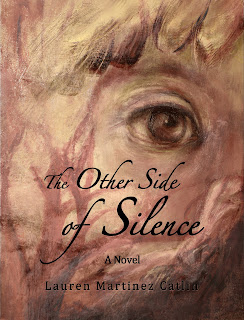
Martinez Catlin is an author and poet who is committed to inspiring compassion through the written word. Her work has enhanced the efforts of A Minnesota Without Poverty, Breaking Free, Source Ministries, Justice4All, and A Beautiful Rescue. She graduated from the University of Minnesota in 2008 with a degree in English Literature. The Other Side of Silence is her first novel. She currently lives in Minneapolis with a very cute husband and a German shepherd.
Check out her website, buy her now-published novel, and watch some of her performances.
It's all about who you know. No one wants to hear that, certainly not me. I've been trying to get published since I was 13 years old, when I had an award-winning short story in hand. Since that disappointing experience I have
queried four different novels. I've
purchased two copies of Writer's Market, and three copies of the equivalent
book on literary agents. I'd read
countless articles on how to get published, what agents are looking for, how to
write a dynamite query letter, the importance of what font you use. Finding an agent seemed not so much like a
business deal as a mystic pagan ritual; if you coughed at the wrong time the
whole thing would be ruined.

One day the
magic finally happened; my father gave a copy of my latest book to a friend,
who then gave it to another friend who happened to be a literary agent. Several months later I got a call from my
father (of all people!) saying that the literary agent loved my book and was
dying to represent me. My husband and I
called everyone we knew and threw a huge party at our house. My best friend brought me a bottle of
champagne. People congratulated me on
all my hard work and persistence. And
then nothing happened. More than a year
later on one of my routine “just calling to check in” calls, I learned that
agent had left the company and they were dropping all her clients. I sat down and cried at my day job.
Then there
was the Amazon Breakout Novel Award (ABNA). It
was a novel contest, and the prize was a $25,000 book deal with Penguin. I took my latest novel (a different book than
the agent had), and submitted it. I did
make the first cut, I was in the top 20 percent, but I didn't make the second
cut. The next year I tried again, same
result. I queried that second book to a
few people, but I couldn't bring myself to do the mass mailings I'd grown too
accustomed to. I kept writing, because I
honestly don't know what else to do with myself.
About a
year later, a friend of my husband from his work started publishing travel
guides on the Kindle. It was something
he was doing on the side because he was being shipped off to Belgium for months
at a time and he needed something to do on the plane. The travel guides were aggregated information
he pulled off of the Internet, not original work, but they were making some
money. He wanted to see if he could take
on some authors with original work, and he knew that I wrote books. This wasn't how I was hoping it would happen,
but this point, I had five books sitting on my hard drive, and I didn't want to
die with them languishing there. So I
said okay. A few months later, I held a
proof copy of my book in my hands. It
was solid and heavy and when I opened it, words I had written were there in
print.
Like most
of the stories I've heard from published authors, this journey is completely
impossible to duplicate. You can't marry
my husband and hope he'd keep the same friends who'd decide to open a
publishing house. I used to get very
frustrated about this kind of story, because I am a very proactive and
pragmatic person. Thus, I will break out
the underlying principles that are duplicable.
First,
write every day. There is something very
sad about having five complete novels sitting on my hard drive, but knowing a
guy who's opening a publishing house does me no good if I don't have a novel to
give him. I had a few, and chose my
favorite. As frustrating as ABNA was, I
wouldn't have been able to participate at all if I hadn't had a novel to
submit. This may sound elemental, but
the first step in publishing a book is writing a book. This is slightly different for non-fiction,
where I've heard you can sometimes get away with a very detailed outline. Write every day anyway, you'll be better off.
Second,
call yourself a writer. Knowing a guy
who's opening a publishing house doesn't help me that much if he doesn't know I
write books. When people ask me what I
do, I tell them that I'm a novelist. I
told them that when I was an administrative assistant, when I was a grunt at a
software company, and when I was a nanny. Those are just jobs, what I do is write books.
Third, make
lots of friends. One of the smartest and
most fun things I've done in the last few years is start performing spoken word
poetry all around the metro. Performing
has given me a chance to promote some causes I really believe in, to meet lots
of other artists, and yes, to gain a tiny bit of name recognition. I'm pretty solidly introverted, so going to a
big event to perform and then try to network is a big challenge for me. Here's how I do it. I pretend that I'm a confident and
interesting person that people want to meet. I pretend that when I approach someone that I'm being very gracious and
magnanimous. I hand out business cards
and say, “Let me know if I can do anything for you,” like I'm doing them a big
favor, and not like I'm putting feelers out for new gigs.
I was invited to write this guest blog because I'm friends with the kind and generous man who runs this website, and he knows that I'm a writer. So there you go.
About the Author:
Martinez Catlin is an author and poet who is committed to inspiring compassion through the written word. Her work has enhanced the efforts of A Minnesota Without Poverty, Breaking Free, Source Ministries, Justice4All, and A Beautiful Rescue. She graduated from the University of Minnesota in 2008 with a degree in English Literature. The Other Side of Silence is her first novel. She currently lives in Minneapolis with a very cute husband and a German shepherd.
Check out her website, buy her now-published novel, and watch some of her performances.
Friday, August 31, 2012

Monday, August 27, 2012
Lance Armstrong's reputation will survive

Why? There are several factors. First, Armstrong always has maintained his innocence. He points to the hundreds of drug tests that he passed as proof.
Second, everyone loves an underdog. In 1996, Armstrong was diagnosed with advanced testicular cancer. Three years later, he inspired people around the world by winning the Tour de France.
Finally, his Livestrong foundation has raised hundreds of millions of dollars to fight cancer. His fundraising efforts have transformed his image from only a cyclist to a humanitarian as well.
Nike, Anheuser-Busch InBev and Oakley all have said that they will continue to sponsor Armstrong. In the court of public opinion, the U.S. Anti-Doping Agency loses.
Tuesday, August 14, 2012
The Flinch by Julien Smith: a book review

What's the flinch, you ask? According to Smith, "The flinch is why the lazy actor never gets discovered -- because she never really sweats to make it happen. It's why the monolithic company gets wiped out by a lean startup -- because the big company culture avoids the hard questions. It's the reason you make the wrong decision, even though you may know what the right one is."
We flinch to avoid pain. While the flinch can save our lives, Smith contends that facing the flinch can sometimes be the best way to get what we want.
To get readers to face the flinch, Smith has some unique homework: take a cold shower, drop a mug, speak to a total stranger. Sounds easy -- until you put it into practice. Then it actually can be hard to face the flinch. By starting out with these exercises, we are able to start to retrain our brain to take on the challenges in our lives.
Smith's book is approximately 131 pages, but has the potential to change your life. So, what are you waiting for? Download it now and change your life for free.
Monday, August 6, 2012
Making the most of Alphabet Bash

Here are some ideas:
- Know what you want to do. If you just want to mingle, that's cool -- there will be plenty of opportunities for that. However, if you want to talk about a more specific topic such as skills for new PR professionals, check out the table talks ahead of time and decide which one(s) you want to attend.
- Explore the entire venue. The table talks typically have been held upstairs at Epic Event Center. If you go upstairs, check out the patio to mingle more and get a breath of fresh air.
- Get to know the partners. You're going to meet many people from several organizations with acronyms (hence the name Alphabet Bash). It helps to know at least a little bit about the organizations beforehand.
- Pace yourself for the after-party. Even though Alphabet Bash wraps up at 10 p.m., that doesn't mean that the networking has to end. Several smaller groups typically have gone to bars after Alphabet Bash. It's a great opportunity to connect on a smaller scale.
Monday, July 23, 2012
PRSA Midwest District shines in Chicago
For two days in July, more than 150 public relations
professionals and educators from nine states gathered in the Windy City for the
2012 Midwest District Conference.
 |
| Hope Bertram of Digital Megaphone, Dan Skinner of ConAgra Foods and Caleb Gardner of Edelman Digital discuss blogger relations at the 2012 PRSA Midwest District Conference. |
The conference, which was held at the Water Tower Campus of
Loyola University, started out with a talk by Al Golin, founder of GolinHarris. Golin shared stories from his
career, including the key to long-term relationships (keeping them current and
not taking them for granted), the three Cs that he looks for in job candidates
(current, creative and curious), and ethics (“In the good old days, ethics
wasn’t different – people just didn’t get caught.”)
Next, attendees learned from two crisis communications
experts: Jack Yeo of MSLGROUP Americas and John R. Brooks,
APR, of North Park University. They
focused on eight laws of crisis communications:
- Protecting reputation is not about the crisis, but rather how you handle it;
- Be aware of the world around you;
- There is no excuse for not planning;
- A swift response is required;
- Understand the impact of today’s digital democracy;
- Always operate with transparency;
- Never stand alone; and
- Never forget to rebuild.
Yeo and Brooks offered numerous case studies along the way,
and encouraged attendees to be among the 54 percent of companies that are
prepared for a crisis.
Several breakout sessions throughout the day provided
attendees with plenty of choices. Topics for the breakouts ranged from
community engagement to personal brands to mentoring, measurement and more.
The afternoon closed out with a talk on transparency from
Andy Shaw, president and CEO of Better
Government Association, and a media panel with three journalists from
Chicago. The media panel included strong opinions from Robert Feder of Time Out Chicago, who said, “Because of
social media, we don’t need you, and you don’t need us.”
On the second day, Mary Henige of General Motors started out
the morning with an overview of her company’s approach to social media. Breakout
sessions followed on a variety of topics including: mobile communications, social media, ethics
and transparency, employee engagement, media relations, and blogger relations.
The second day closed with a power-packed panel featuring
representatives from Google, Twitter, and Facebook discussing what’s new at
their networks.
The conference was preceded by a Midwest District Leadership
QuickStart. QuickStart attendees were treated to an intimate session with Cheryl Procter-Rogers,
APR, Fellow PRSA, who shared her insights on leadership and innovation.
Subscribe to:
Posts (Atom)