Monday, October 8, 2012

How $700 got lifted from my wallet. . .my LivingSocial complaint

living social customer service
Caveat emptor. A few times I have purchased deals from sites like LivingSocial or Crowd Cut, such as a restaurant discount or money off at a bed and breakfast.

Deals on those sites worked out fine for me -- until now. This spring my wife bought six Zerona laser treatments for $699.00 from Maple Grove Wellness.

I personally would not have purchased something health-related from LivingSocial. My wife, however, had researched Zerona and was waiting for the appropriate time to purchase a deal.

She made an appointment with Maple Grove Wellness, but was not able to get in until after the LivingSocial refund time frame expired (five days).

The LivingSocial refund policy says:  "LivingSocial will provide a refund if you change your mind within five days after you've purchased your voucher and want to 'return' the unused voucher. After that, we do not provide refunds except that we will provide a refund if you are unable to redeem a voucher because the merchant has gone out of business."

My wife went to her initial consultation with Maple Grove Wellness and the "physician" was unable to and/or unwilling to answer some of her questions regarding the procedure (success rates, side effects, etc.). That made her uncomfortable with having it done at Maple Grove Wellness, so she sought a refund. After contacting LivingSocial consumer services, she was told that no refund would be available.

There's a lesson to be learned here -- don't buy health-related deals (LASIK, Zerona, body waxing, facials, etc.) on deal sites. You probably will not be able to get an appointment until you're outside of the LivingSocial refund time frame, and then you'll be out your money. In my case, it was $699.00 down the drain. Buyer beware.

Friday, October 5, 2012

Creative inspiration

inspire creative
Panelists at the Minnesota PRSA event (l-r):  Brian Prentice, Scott Broberg, Bart Heird, Paul Maccabee
Create a joke about corn on the cob and thirst. Not the easiest thing to do, right? It was, in fact, the challenge that Bart Heird of Aimia gave my breakout group at a recent Minnesota Public Relations Society of America (PRSA) event recently. (You can read my fabulous joke at the end.)

Heird was one of the panelists for the "Infusing Creativity into Your Job" workshop held at Padilla Speer Beardsley on Sept. 27.

The event started out with a panel featuring Heird, Scott Broberg of Fast Horse, Paul Maccabee of Maccabee Public Relations, and Brian Prentice of Padilla Speer Beardsley.

Attendees learned many nuggets about how to inspire creativity such as:
  • Train yourself to remember your dreams to capture awesome creative ideas.
  • Unplugging is essential for inspiring creativity.
  • The solution is the least important part of creative thinking - set it aside and it will come.
The panelists each had unique takes on creativity. "What's original 20 years ago could be original today because of idea regeneration," said Heird.

Broberg pointed out that a simple twist on an idea can take it from good to great.

In regard to the "blue sky," Prentice said that it can be scary for creative people. "Sometimes it helps to have the box defined," he said.

Maccabee commented on the shifting expectations of clients as transitioning from "Get me on Oprah" to "Make my video go viral."

Breakout Sessions

After the panel discussion, attendees had the opportunity to get up close with each of the creative masterminds in breakout groups that rotated.

Maccabee presented groups with a situation involving Gold'n Plump chicken. Participants needed to collaborate on the launch of chicken called "Just Bare." Zero advertising was taking place, and Gold'n Plump needed to reach women who are "mindful eaters" ages 25 to 45 with one to three children. One caveat:  the company didn't want anyone playing off of the "Just Bare" name in the "au naturale" sense that immediately comes to mind.

Prentice provided an excellent way to break the ice:  Story Cubes. With Story Cubes, people simply rolled the dice and used the pictures on the dice to create stories on the spot.

Broberg reflected on brainstorms in his breakout group. Some tips that he had for effective brainstorms included:  removing distractions, asking "Why not?" and bringing in research and facts to help brainstorms stay on track.

Remember the challenge to create a joke about corn on the cob and thirst? Heird provided some guidelines to joke writing in his breakout session. He said that jokes need to be plausible and encouraged people to be curious and to find patterns and associations.

So, now as to my joke about corn on the cob and thirst:  The drought was so bad this year that even corn on the cob was drinking soda made with high fructose corn syrup.

Tuesday, September 11, 2012

Tuesday, September 4, 2012

How to get a book published

Guest post by Lauren Martinez Catlin


It's all about who you know. No one wants to hear that, certainly not me. I've been trying to get published since I was 13 years old, when I had an award-winning short story in hand. Since that disappointing experience I have queried four different novels. I've purchased two copies of Writer's Market, and three copies of the equivalent book on literary agents. I'd read countless articles on how to get published, what agents are looking for, how to write a dynamite query letter, the importance of what font you use. Finding an agent seemed not so much like a business deal as a mystic pagan ritual; if you coughed at the wrong time the whole thing would be ruined. 
 
how to get published
One day the magic finally happened; my father gave a copy of my latest book to a friend, who then gave it to another friend who happened to be a literary agent. Several months later I got a call from my father (of all people!) saying that the literary agent loved my book and was dying to represent me. My husband and I called everyone we knew and threw a huge party at our house. My best friend brought me a bottle of champagne. People congratulated me on all my hard work and persistence. And then nothing happened. More than a year later on one of my routine “just calling to check in” calls, I learned that agent had left the company and they were dropping all her clients. I sat down and cried at my day job. 
 
Then there was the Amazon Breakout Novel Award (ABNA). It was a novel contest, and the prize was a $25,000 book deal with Penguin. I took my latest novel (a different book than the agent had), and submitted it. I did make the first cut, I was in the top 20 percent, but I didn't make the second cut. The next year I tried again, same result. I queried that second book to a few people, but I couldn't bring myself to do the mass mailings I'd grown too accustomed to. I kept writing, because I honestly don't know what else to do with myself. 
 
About a year later, a friend of my husband from his work started publishing travel guides on the Kindle. It was something he was doing on the side because he was being shipped off to Belgium for months at a time and he needed something to do on the plane. The travel guides were aggregated information he pulled off of the Internet, not original work, but they were making some money. He wanted to see if he could take on some authors with original work, and he knew that I wrote books. This wasn't how I was hoping it would happen, but this point, I had five books sitting on my hard drive, and I didn't want to die with them languishing there. So I said okay. A few months later, I held a proof copy of my book in my hands. It was solid and heavy and when I opened it, words I had written were there in print. 
 
Like most of the stories I've heard from published authors, this journey is completely impossible to duplicate. You can't marry my husband and hope he'd keep the same friends who'd decide to open a publishing house. I used to get very frustrated about this kind of story, because I am a very proactive and pragmatic person. Thus, I will break out the underlying principles that are duplicable. 
 
First, write every day. There is something very sad about having five complete novels sitting on my hard drive, but knowing a guy who's opening a publishing house does me no good if I don't have a novel to give him. I had a few, and chose my favorite. As frustrating as ABNA was, I wouldn't have been able to participate at all if I hadn't had a novel to submit. This may sound elemental, but the first step in publishing a book is writing a book. This is slightly different for non-fiction, where I've heard you can sometimes get away with a very detailed outline. Write every day anyway, you'll be better off.

Second, call yourself a writer. Knowing a guy who's opening a publishing house doesn't help me that much if he doesn't know I write books. When people ask me what I do, I tell them that I'm a novelist. I told them that when I was an administrative assistant, when I was a grunt at a software company, and when I was a nanny. Those are just jobs, what I do is write books. 
 
Third, make lots of friends. One of the smartest and most fun things I've done in the last few years is start performing spoken word poetry all around the metro. Performing has given me a chance to promote some causes I really believe in, to meet lots of other artists, and yes, to gain a tiny bit of name recognition. I'm pretty solidly introverted, so going to a big event to perform and then try to network is a big challenge for me. Here's how I do it. I pretend that I'm a confident and interesting person that people want to meet. I pretend that when I approach someone that I'm being very gracious and magnanimous. I hand out business cards and say, “Let me know if I can do anything for you,” like I'm doing them a big favor, and not like I'm putting feelers out for new gigs. 

I was invited to write this guest blog because I'm friends with the kind and generous man who runs this website, and he knows that I'm a writer. So there you go.


About the Author:

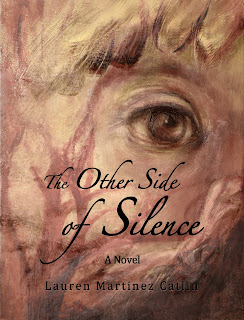
Martinez Catlin is an author and poet who is committed to inspiring compassion through the written word. Her work has enhanced the efforts of A Minnesota Without Poverty, Breaking Free, Source Ministries, Justice4All, and A Beautiful Rescue. She graduated from the University of Minnesota in 2008 with a degree in English Literature. The Other Side of Silence is her first novel. She currently lives in Minneapolis with a very cute husband and a German shepherd.

Check out her website, buy her now-published novel, and watch some of her performances.

Monday, August 27, 2012

Lance Armstrong's reputation will survive

Lance Armstrong and Cancer
Even though the U.S. Anti-Doping Agency has decided to strip Lance Armstrong of his seven Tour de France wins after he decided to stop fighting charges that he used performance-enhancing drugs, Armstrong's reputation still is intact.

Why? There are several factors. First, Armstrong always has maintained his innocence. He points to the hundreds of drug tests that he passed as proof.

Second, everyone loves an underdog. In 1996, Armstrong was diagnosed with advanced testicular cancer. Three years later, he inspired people around the world by winning the Tour de France.

Finally, his Livestrong foundation has raised hundreds of millions of dollars to fight cancer. His fundraising efforts have transformed his image from only a cyclist to a humanitarian as well.

Nike, Anheuser-Busch InBev and Oakley all have said that they will continue to sponsor Armstrong. In the court of public opinion, the U.S. Anti-Doping Agency loses.