Wednesday, February 29, 2012

Understanding media lead times

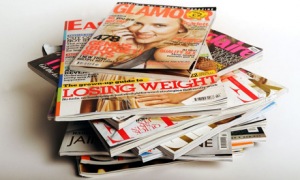
With our in-the-now mentality, it can be difficult to think a season ahead. But that's exactly what's necessary to successfully pitch media outlets with long lead times.

Lead times vary with how frequently a media outlet publishes an issue or runs a particular segment. Here's a quick guide:
  • Magazines:  Lead times are most important to consider when pitching magazines. Depending on the publication, lead times can vary from two to five months or more. If you're unsure about which issue the editorial staff is currently working on, feel free to contact them. They will provide you insight into how far ahead you should be in touch.
  • TV and Radio:  In general, broadcast outlets plan their coverage first thing every morning as well as provide updates throughout the day. After all, who knows when a fire or some other breaking news event is going to happen? If you're pitching an event, it works out best to send a media advisory a couple of weeks before the event and then again the day before the event. That way the media outlet at least will have the information to consider for coverage.
  • Newspapers:  Slightly similar to TV and radio, newspapers cover the news of the day. For regular features like business briefs, event calendars, etc., expect your item to take a few weeks to run. The best approach is to look at the particular section you want to pitch and see if there is information about how far in advance information needs to be sent for publication.
With some planning, you can successfully get your information into the media's hands at the right time.

Sunday, February 12, 2012

Taking PR from the 24-hour news cycle to the 24-second Twitter cycle

I recently had a guest post on the Public Relations Society of America PRSAY blog about how public relations professionals can be prepared for their organization’s use of social media and the role that PRSA can play.

Check it out!

Wednesday, February 8, 2012

A look at Minnesota PRSA in 2012

Now that 2012 is underway, I would like to provide a snapshot of what the Minnesota chapter of Public Relations Society of America (Minnesota PRSA) has in store. As president of the chapter, I see numerous ways that we will advance the profession and the professional this year.

First, I'll start with students -- the future leaders of the public relations profession. Our chapter supports 11 Minnesota-affiliated Public Relations Student Society of America (PRSSA) chapters. I have as a goal for 2012 that a member of our board of directors will visit each of those PRSSA chapters during the year. We need to bridge the gap between PRSSA chapters and Minnesota PRSA; PRSSA graduates receive an excellent discount after graduation as a PRSA Associate Member.

Speaking of younger professionals, at the Classics banquet on March 29, the inaugural recipient of the Young Professional Award will be named. With this award, Minnesota PRSA recognizes the passion of the next generation of leaders and awards a young professional with three to seven years of post-undergrad experience.

The first event on the chapter's programming calendar is coming up at the end of the month:  Minnesota PRSA Pro-Am Day. Pro-Am Day (short for Professional-Amateur Day) is an annual mentoring event matching Twin Cities public relations professionals with PRSSA students in an effort to provide a day of job shadowing and networking for participating students to learn more about the public relations industry. The day wraps up with a fun speed networking event that connects students and professionals on a rapid basis.

If you have been thinking about earning Accreditation in Public Relations (APR), this April offers an excellent opportunity right here in Minneapolis with the APR Boot Camp! The APR Boot Camp is a four-day intensive course for candidates to prepare and advance though the Readiness Review™ and take the computer-based Examination for Accreditation in Public Relations (APR) or Accreditation in Public Relations + Military Communication (APR+M). This course is designed to provide a setting that will meet the needs of busy professionals whose schedules don’t permit extensive preparation time.

Minnesota PRSA programming in 2012 is designed to be compelling, providing excellent opportunities for professionals to develop their skills while having fun networking. Stay tuned to our website and social networks for more events to be announced.


In terms of an online presence, we are in the process of developing a more robust website. It is expected to be done in the first part of the year.


I hope to see you at Minnesota PRSA events this year. Here's to an exciting 2012!
Thursday, February 2, 2012

How to find media contact information

While reporters are eager to get the latest scoop, they also are awfully busy people. They are constantly on deadline, and therefore don't want to get inundated with e-mails. As a result, reporters sometimes make it a little difficult to connect with them for pitches.

So how does one get media contact information?

Well, the best approach is to subscribe to a professional database like Cision and Vocus. With these databases, reporters' information is regularly updated, and there also is the ability to distribute media materials directly to reporters through the database.

Here are some options if you do not have access to Cision or Vocus:

  1. Media outlet websites. If you know the media outlet that you want to reach, check out its website. Often there will be a "Contact Us" or "Staff Directory" page. While these pages may not be highly prominent on the site, you can use Google for a site search. For instance, here's how I find the staff directory for the StarTribune using Google:  "Staff Directory" site:www.startribune.com
  2. Twitter. There are many lists on the Internet of journalists who are on Twitter. Start following the journalists that are of interest to you; if they happen to follow you back, then you can send them a direct message.
  3. Help a Reporter Out (HARO). With HARO, journalists post their queries -- the news stories for which they need sources. By taking a look at these queries, you will be able to get a sense of which reporters are covering the stories in your key topic areas.
  4. Bylines. Many reporters have their e-mail address or other contact information next to their byline or the end of the article; some TV reporters have their e-mail address under their name on the screen.
So, in essence, if you do not have Cision or Vocus, one of the best ways to get in touch with reporters is to be "media aware." This involves keeping your eyes peeled and ears tuned in for reporters that might be interested in your story. Developing relationships with those reporters will help them to be more receptive to your pitch.

Finally, you could always contact the main number for the media outlet and go through the operator; it's easier when you have the direct line to a reporter, though.

Monday, January 23, 2012

Radio interview tips

So far we've discussed preparing for TV interviews as well as for print (newspaper or magazine) interviews. Getting ready for a radio interview involves a combination of the recommended preparation for a TV or print interview.

As in any interview, it's helpful to know the background information of the radio show and the person who will be interviewing you. Does the show tend to lean toward one side or the other politically? Is the interviewer generally enthusiastic and positive or often stirring up negativity?

Also, think about your objective for the interview -- what you want to get as a result of participating. Consider your key messages; you will want to often come back to these during the interview. Write down supporting facts or examples that you can use during the interview. A great aspect of radio interviews is that they are usually done over the phone; even if the interview is in the studio, you can have your notes in front of you.

According to presentation and media trainer Mary Milla of What's Your Point?, radio interviews have the following characteristics:
  • They are generally short (five to 10 minutes long).
  • The reporters often know a little bit about the topic.
  • A broadcast soundbite typically lasts nine to 15 seconds, so limit your answers to about 30 seconds to avoid being misquoted.
As always, remember to be enthusiastic and to avoid saying "no comment."

Monday, January 16, 2012

Preparing for a newspaper or magazine interview

Preparation can be the key to success if you're going to be interviewed by a newspaper or magazine reporter. Considering time constraints and efficiency, you probably will be interviewed over the phone.

So to get ready, here are some suggestions.

Start out by gathering some background information on the reporter and the publication. By doing research on the types of stories that the reporter has written as well as his or her educational and professional background, you can get a perspective on the types of questions that the reporter might ask in the interview.

As in any type of interview, think of two or three messages or key points that you want to communicate. In the ideal situation, one of these key messages would be the headline or the news hook of the story. If you know what you want to get out of the interview, you will be able to stay focused and bring the interview back on track if you see it going off course.

Print (newspaper or magazine) interviews differ from television or radio ones in a couple of ways, according to media trainer Mary Milla:
  • Newspaper quotes run about 10 to 25 words. To avoid getting misquoted, keep your answers to fewer than 75 words.
  • Print reporters can conduct longer interviews and have more research time.
  • If there's something that you don't know the answer to, you can say "I don't know," and get back to the reporter.
As in any interview, avoid "no comment," because it leaves a guilty impression. Remember that you're always on the record; if you don't want something in the story, don't say it.

Finally, if a reporter calls you and wants to interview you right away, it's OK to ask what his or her deadline is, what types of questions he or she has, and to tell him or her that you will call him or her back.

For a collection of more public relations tips, insights and reflections, buy the book "19 Tips for Successful Public Relations: Insights on Media Relations and Reputation Management" from amazon.com!

Tuesday, January 10, 2012

TV interview tips

Your public relations professional just scored a TV interview for you -- congratulations! Now what?

Let's take a look at how you can shine and represent your organization effectively.

First, get some background information on the reporter or the TV show. Look at some previous interviews -- is the reporter generally hard-hitting, or relatively neutral? It's good to have a feel for the reporter's personality.

Second, prepare by developing and practicing two or three key messages or major points. Know what you want to communicate -- think of this as the headline or news hook.

According to presentation and media trainer Mary Milla of What's Your Point?, TV interviews differ from radio or newspaper interviews in a couple of key ways:
  • A broadcast soundbite runs nine to 15 seconds. In order to not get misquoted, Milla recommends limiting your answers to 75 words (about 30 seconds).
  • TV interviews typically are short, and the reporters are generally not well-versed in the topic.
Finally, be energetic! In the interview, answer the reporter's questions with energy and enthusiasm. That helps you to come across as credible. (Just don't go overboard like Tom Cruise on Oprah's couch!)

Oh, and by the way, everything is on the record. Be careful with what you say; if you don't want something to be used, don't say it. And don't say "no comment" -- it just leaves the impression of guilt. Good luck!